
The belief that online earning is only for tech-savvy people has discouraged thousands of capable individuals from even starting. It sounds logical on the surface. The internet feels complex, platforms look unfamiliar, and success stories often highlight tools and strategies that seem advanced. But this assumption is outdated and misleading.
Why This Myth Still Exists
This idea comes from an earlier phase of the internet where building anything online required coding, technical setup, and specialized knowledge. At that time, the barrier to entry was real. Today, that landscape has changed completely. Most platforms are designed for ease of use, with intuitive dashboards, guided steps, and built-in systems that remove technical friction.
Despite this shift, the narrative has not caught up. Many beginners still assume they need to master technology before they can earn, which delays action.
What “Tech-Savvy” Really Means Today
Being tech-savvy no longer means writing code or building software. In practical terms, it means being comfortable using apps, navigating platforms, and following simple processes. If someone can use a smartphone, manage social media, or shop online, they already have the foundational skills required to start.
The gap is not technical ability. It is familiarity and confidence.
Beginner-Friendly Ways to Start Earning Online
There are multiple entry points that require minimal technical knowledge:
- Freelance services like writing, design, or basic data work
- Reselling products through online marketplaces
- Affiliate marketing using content platforms
- Social media-based income through niche content
Each of these models focuses more on consistency and value creation than on technical expertise.
The Role of No-Code Tools and Platforms
Modern platforms have simplified execution. You do not need to build a website from scratch to sell products. You do not need advanced software to create content. No-code and low-code tools allow users to launch, test, and scale without dealing with technical complexity.
Marketplaces handle logistics. Payment gateways are integrated. Content platforms provide built-in audiences. This reduces the need for technical involvement significantly.
What Actually Determines Success
From a practical standpoint, three factors matter more than technical skill:
- Clarity on what you are offering
- Consistency in execution
- Understanding of your target audience
People who succeed online are not necessarily the most technical. They are the ones who take action early, learn as they go, and refine based on feedback.
Common Mistakes Beginners Make
Many beginners spend too much time preparing instead of starting. They watch tutorials, compare tools, and try to understand everything at once. This leads to confusion and inaction.
Another common mistake is assuming that more tools equal better results. In reality, a simple setup executed consistently outperforms a complex system that is never used properly.
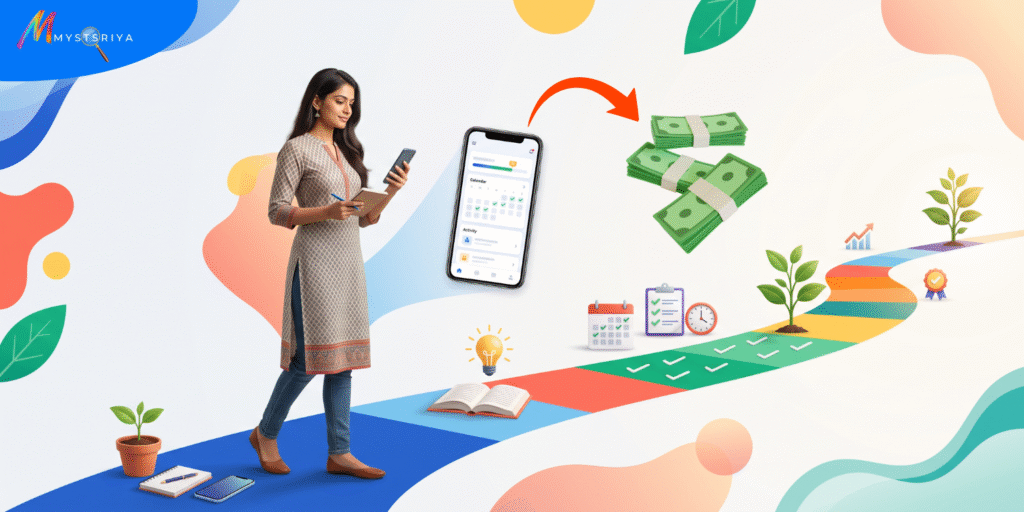
A Practical Way to Get Started
A more effective approach is to choose one model and commit to it for a defined period. Learn only what is required for that path. For example, if the goal is to sell products, focus on listing, pricing, and basic marketing. Avoid distractions that do not directly contribute to revenue.
Small actions create momentum. Momentum builds confidence. Confidence replaces the fear of technology.
Real-World Perspective
Many individuals earning online today started without any technical background. They learned platform basics through use, not theory. Their growth came from doing, not waiting to become “ready.”
This pattern is consistent across different income models. The starting point is rarely expertise. It is willingness.
Simplifying the Journey
Platforms like Mystsriya focus on making online earning more accessible by breaking down complex ideas into clear, actionable steps. The emphasis is not on overwhelming users with information but on guiding them toward practical execution.
Final Takeaway
Online earning is not limited to tech-savvy individuals. It is accessible to anyone willing to start with what they already know and build from there. The real barrier is not technology. It is the belief that you need to master it before taking the first step.
Start simple. Stay consistent. Learn only what is necessary. The rest becomes easier with action.