For years, the gig economy was marketed as flexible work. In practice, it rarely delivered consistent value for women.
Unpredictable income, safety concerns, and rigid expectations made many gig roles difficult to sustain alongside daily responsibilities.
That gap is now narrowing.
A more structured, mobile-first layer of the gig economy is emerging. It is designed around real routines, not ideal scenarios. For many women, this is the first time gig work feels usable rather than theoretical.
What Didn’t Work Earlier
The earlier version of gig work had structural limitations:
Time rigidity
Many roles still required fixed slots, long hours, or physical presence.
Safety concerns
Location-based gigs such as deliveries or rides were not always viable.
Income unpredictability
Earnings depended heavily on demand spikes and availability.
High entry effort
Onboarding, verification, and setup created friction before earning even began.
For women balancing multiple responsibilities, these were not minor issues. They were deal breakers.
What Changed
This shift is the result of gradual changes in technology and platform design.
1. Mobile-first workflows
Tasks are now designed to be completed entirely on smartphones, without setup complexity.
2. Micro-tasking instead of long gigs
Work is broken into smaller, defined actions rather than multi-hour commitments.
3. Platform-led structure
Clear campaigns, timelines, and payout systems reduce ambiguity.
4. Improved access and trust
Simplified onboarding has made participation easier for first-time users.
The Rise of Participation-Based Earning
A key shift is the move from service-based gigs to participation-based earning.
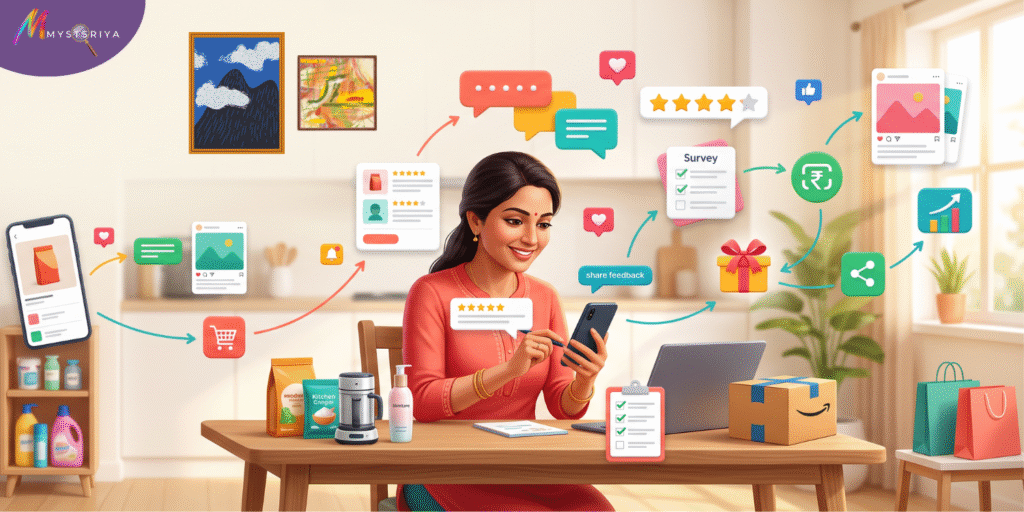
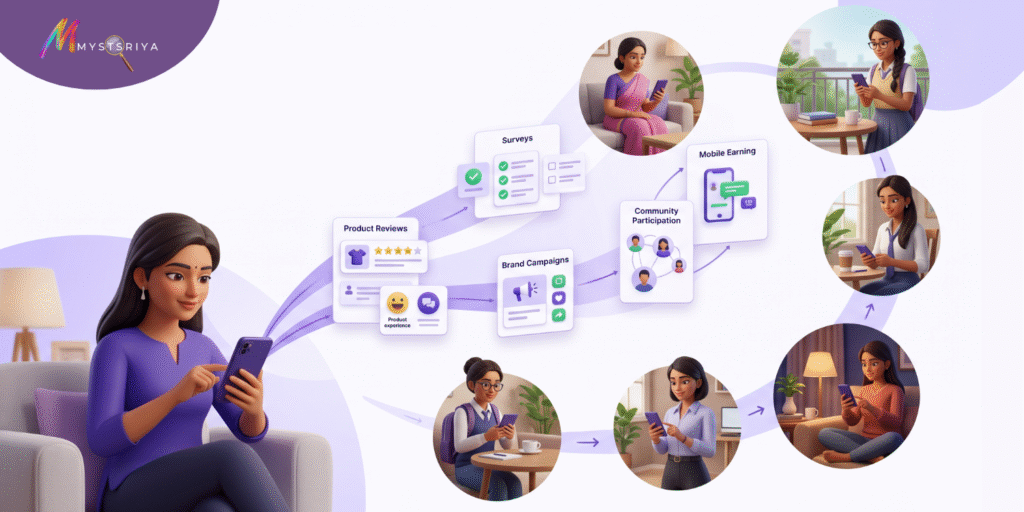
Instead of offering labor-intensive services, users contribute through:
- Product feedback
- Reviews
- Surveys
- Brand participation tasks
This model aligns better with everyday routines. It does not require long uninterrupted hours or specialized skills.
According to a 2024 report by the International Labour Organization, women make up nearly 41% of the global gig workforce, but participation is significantly higher in roles that offer remote, flexible, and low-time-commitment tasks. This reinforces the direction the ecosystem is moving toward.
How New-Age Platforms Are Structuring This Work
A newer category of platforms is building around this participation model.
Common characteristics include:
Campaign-based structure
Users engage in predefined activities rather than searching for work.
Low entry barrier
Minimal onboarding and no prior experience required.
Time flexibility
Tasks are designed to fit into short, available time slots.
Contextual relevance
Activities often involve real products or everyday use cases, making participation more intuitive.
This reduces the friction that earlier gig formats created.
Why This Model Works Better
The difference is not just flexibility. It is aligned with how time is actually managed.
Fits into existing routines
Work happens alongside daily activities, not in place of them.
Lower cognitive load
Short tasks are easier to start and complete without fatigue.
No location dependency
Everything can be done from home or during idle moments.
Progressive income flow
Earnings build gradually without pressure to scale aggressively.
A More Realistic Day-to-Day Flow
Instead of fixed time blocks, participation happens in pockets of availability:
- While commuting or waiting in line
- During short breaks between tasks
- In the evening when scrolling through the phone
For example, a user might complete a quick survey during a commute, review a product later in the day, and check available campaigns at night.
Individually, each action is small. Collectively, they form a consistent earning pattern over time.
The Psychological Shift
There is also a mindset change.
Earlier, gig work felt like additional effort layered onto an already full day.
Now, it feels more like selective participation.
- You are not chasing work
- You are choosing when to engage
- You are earning without restructuring your day
This shift is what makes the model sustainable.
What Women Are Actively Searching For
Search behavior reflects this transition:
- earn money from phone for women
- flexible work from home options
- part-time income ideas without investment
- earn by reviewing products
The intent is clear. The focus is on control, not hustle.
Common Misconceptions
“Gig work is still unstable”
Stability improves when frequency replaces dependency on large payouts.
“You need specialized skills”
In participation-based systems, consistency matters more than expertise.
“Small tasks don’t add up”
Individually small, but collectively meaningful when done regularly.
Final Take
The gig economy did not become perfect. It became more usable.
Work is now:
- Shorter
- Simpler
- More structured
- Easier to repeat
For many women, that is the difference between ignoring an opportunity and actually using it.
What You Can Do Next
If you have been exploring flexible income options but found traditional gig roles difficult to maintain, this new model is worth testing.
Start small.
Engage consistently.
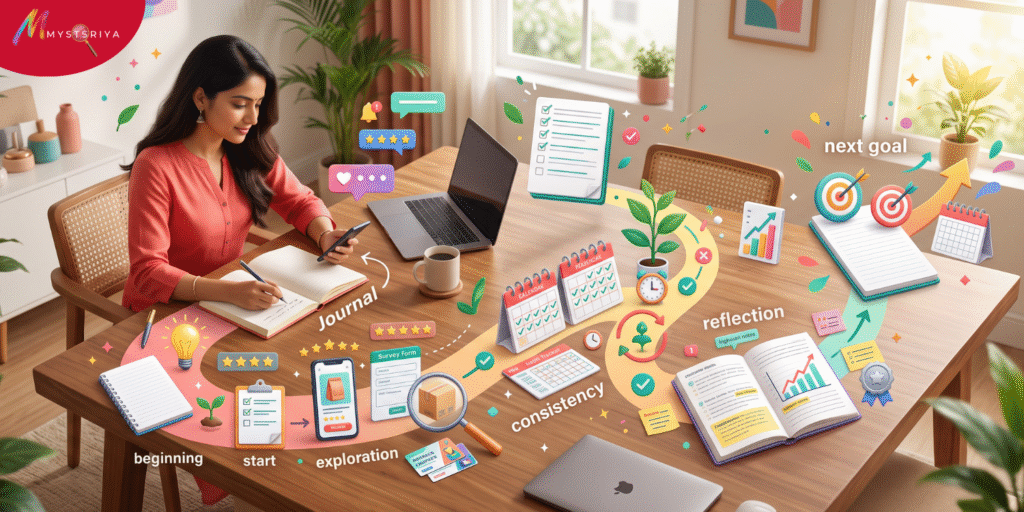
Track what works for you.
Over time, the goal is not just to earn more, but to build a system that fits into your life without forcing trade-offs.